
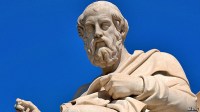
THE Greek founders of philosophy constantly debated how best to live the good life. Some contended that personal pleasure is the key. Others pointed out that serving society and finding purpose is vital. Socrates was in the latter camp, fiercely arguing that an unvirtuous person could not be happy, and that a virtuous person could not fail to be happy. These days, psychologists tend to regard that point as moot, since self-serving “hedonic” pleasures generate the same sorts of good feelings as those generated by serving some greater “eudaimonic” purpose. However, a study just published in the Proceedings of the National Academy of Sciences, by Barbara Fredrickson, a psychologist at the University of North Carolina, Chapel Hill, and her colleagues suggests Socrates had a point. Though both hedonic and eudaimonic behaviour bring pleasure, the eudaimonic sort also brings health.
via Psychosomatic medicine: The right kind of happy | The Economist.
Related articles
- The right kind of happy (economist.com)
- Human cells respond in healthy, unhealthy ways to different kinds of happiness (psypost.org)
- How Different Types of Happiness Affect Our Fundamental Being, Influence Genes (medicaldaily.com)
- Human Body Distinguishes Between ‘Hedonic’ and ‘Eudaimonic’ Happiness on Molecular Level (natureworldnews.com)
- Scientists: State Of Mind Affects Genes (medindia.net)


 CALL ME MAGGIE
Leave a reply to Keith Wayne Brown Cancel reply